What is the best AI voice for a faceless YouTube channel if I don't want monthly credits?
The one you buy once and run on your own machine. txt2mp3 is a Mac app that generates speech from a model on your own disk: one payment, and after that no credits, no character counter, and no monthly bill. For a faceless channel that property decides the question, because narration is the only production cost that rises every time you publish more.
What buying once actually gets you
The second take is free, so fixing a flat delivery becomes a decision about the edit instead of a decision about the budget. The cost per video falls with every video you publish, because the number on top stopped moving. And the generator keeps working after you stop paying, so episode 200 can use the same voice as episode 1 with no active plan behind it.
Where a metered plan still makes sense
If you publish a few minutes a month, a meter never bites. ElevenLabs' free tier covers about ten minutes of text-to-speech a month, and its $6 Starter plan covers about thirty and adds a commercial licence. Nothing bought outright beats that. A cloud library is also ahead when a channel needs dozens of languages or a catalogue of character voices, and txt2mp3 runs only on Apple silicon, so a Windows or Linux edit bay rules it out before the price does. The arithmetic below is for one narrator, many minutes, every week.
Why narration is the one cost that grows with your channel
Every other line in a faceless production budget is flat. The editor costs the same in a month you shipped four videos and a month you shipped thirty. So does the stock footage plan, the thumbnail tool, and the machine on the desk. A per-character meter is the exception: it charges by output, so it is the one tool whose bill follows your upload calendar upward.
The meter also charges for work you never publish. It counts characters sent to the model, not minutes that survive the edit, so an alternate intro, a re-recorded correction and a section you cut all bill exactly like the take you kept. What the meter counts, and when a regeneration is free, is in our guide to what per character billing means.
On ElevenLabs there is a second multiplier in the same pool. Credits are shared across every product on the account, so speech-to-text, dubbing, music and sound effects draw down the same monthly allowance as your narration. Captioning an episode through their speech-to-text costs about 330 credits a minute, which comes out of the characters you were going to speak with.
Voiceover cost per video, counted properly
Divide the monthly bill by the videos you actually published, then check whether the plan covered every take you generated getting there. The second half is the part pricing pages leave out, and it is usually where the real number doubles.
Two assumptions run through the rest of this section, and neither is a measurement. Narration at a steady reading pace runs about 150 words a minute, so an eight-minute video is roughly 1,200 words of script. ElevenLabs prices standard text-to-speech at about one credit per character and also states plan capacity in minutes: about 10 on Free, 30 on Starter, 121 on Creator, and 600 on Pro. Minutes are the easier unit, so the tables below use theirs.
The retake multiplier nobody prices
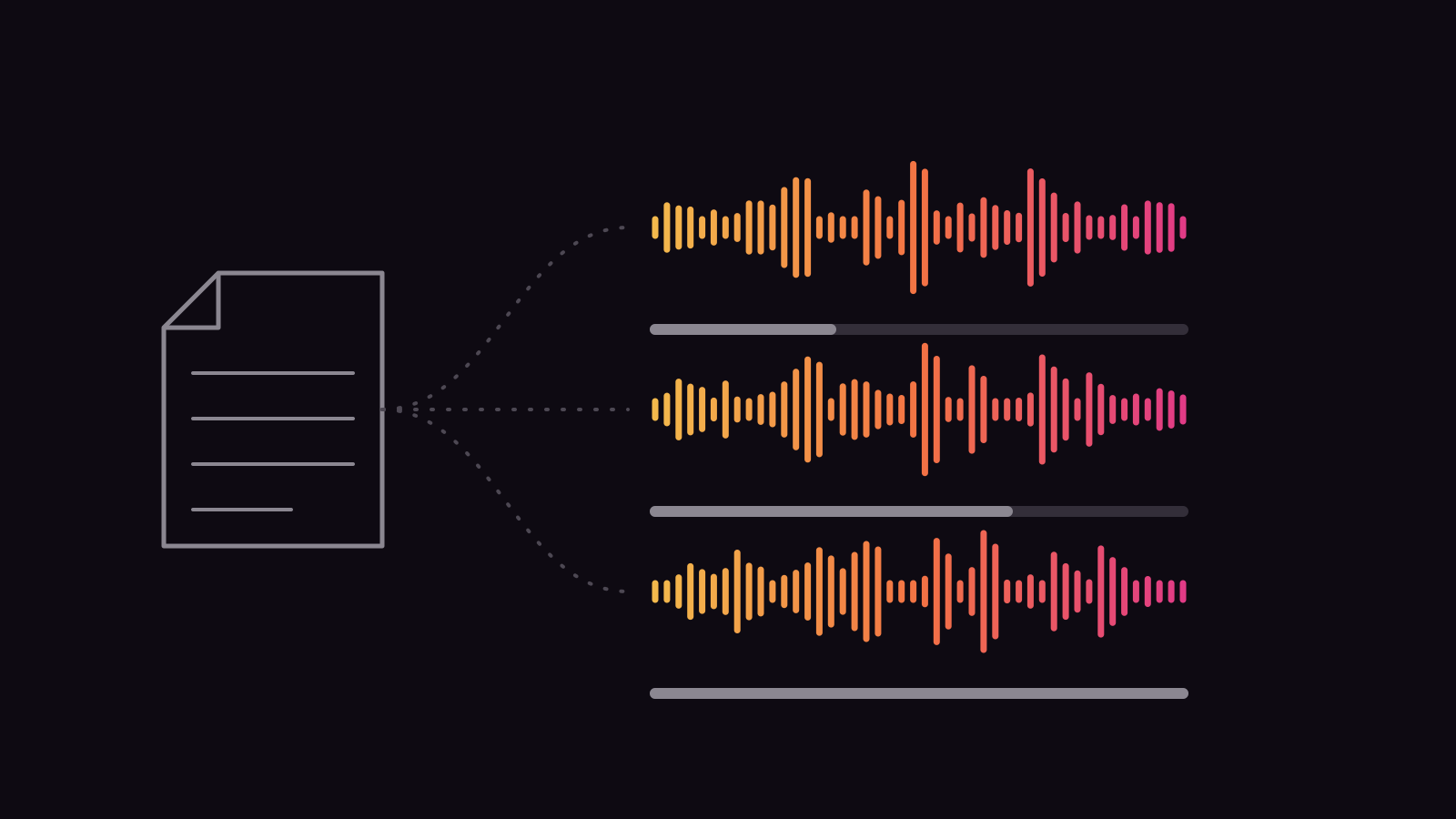
A finished eight-minute narration is not eight minutes of generation. Names come out wrong, one line lands flat, a sentence gets rewritten after you hear it. Two takes per section is a modest habit for a channel that cares how the read sounds, and it doubles the generated minutes sitting behind every published minute.
ElevenLabs charges credits per generation request rather than per download, and says a limited number of free regenerations may be available as long as the content and certain settings do not change. Read that condition closely. A free regeneration covers pressing the button again on identical text at identical settings. The retake that matters, the one where you rewrote the line or moved a voice setting, is a fresh charge.
Cost per finished minute at 4, 12 and 30 videos a month
Eight-minute videos, two takes of every section, and the cheapest ElevenLabs plan whose included minutes cover the generation. Thirty videos a month is 240 finished minutes:
| Videos a month | Generated minutes | Cheapest plan | Monthly | Per finished minute | Per video |
|---|---|---|---|---|---|
| 4 | 64 | Creator, ~121 min | $22 | $0.69 | $5.50 |
| 12 | 192 | Pro, ~600 min | $99 | $1.03 | $8.25 |
| 30 | 480 | Pro, ~600 min | $99 | $0.41 | $3.30 |
The middle row is the one worth staring at. Twelve videos a month is a healthy cadence, and it is the most expensive per video of the three, because 192 generated minutes overshoots Creator's 121 and lands on a $99 plan sized for five times that output. Nothing about those videos got harder to make. The channel crossed a line on someone else's meter.
Push the daily channel to three takes and the same effect arrives from the other side: 720 generated minutes against 600 included, and the 120 extra minutes bill at about $0.17 each. That month costs $119.40, or $3.98 a video.
Metered subscriptions vs one time payment TTS
A subscription rents the capability for as long as you keep paying. A purchase buys the generator. The comparison that decides between them is not this month's price, it is the twelve-month total, the price of one more take, and what is still on your disk afterwards.
The break-even, in videos
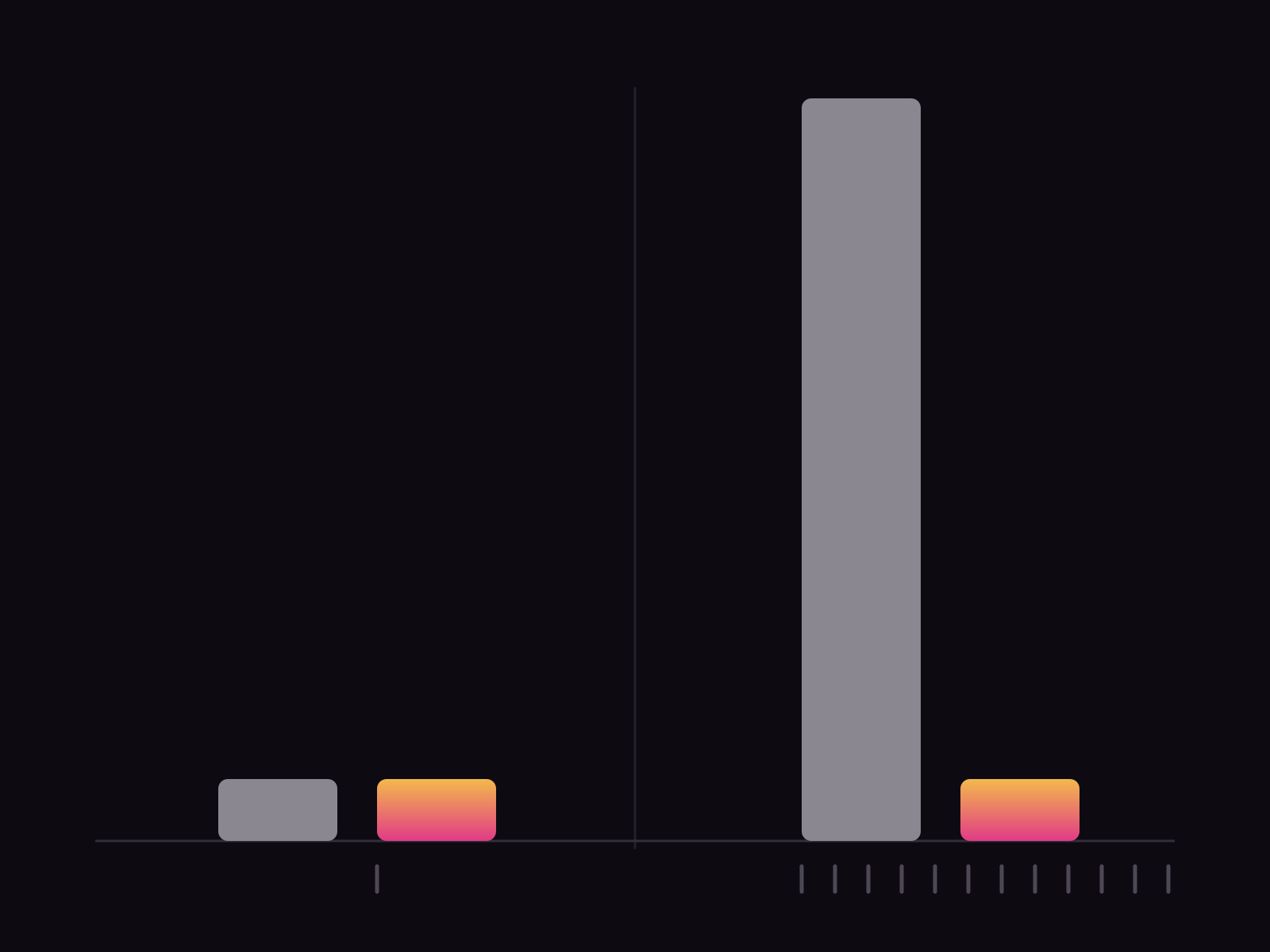
txt2mp3's standing price is $99, and launch copies are cheaper. A daily faceless channel needs the $99 Pro plan to cover two takes of thirty eight-minute videos, so at the standing price the whole app costs one month of the plan it replaces. At four videos a month on Creator, the $99 is passed during month five.
Twelve months of daily uploads costs $1,188 on Pro, and the meter resets in January with nothing carried over. The same twelve months on a bought-once app costs the purchase price once. By video 360, that works out at about 28 cents a video, and video 361 pushes it lower.
| Option | Billing | 12 months daily | If you stop paying |
|---|---|---|---|
| ElevenLabs Creator | $22 a month, ~121 min | $264, too small for daily | Exported audio only |
| ElevenLabs Pro | $99 a month, ~600 min | $1,188, then again | Exported audio only |
| txt2mp3 | One payment, $29 launch, $99 standing | The price, once | App, model, voices |
The column the table leaves out is the retake. Past the included minutes, ElevenLabs charges about $0.18 a minute on Creator and about $0.17 on Pro, and inside them a retake is free only under the condition quoted earlier: same text, same settings. On a bought-once generator a retake costs about five seconds of your Mac, at any volume, forever.
What you keep if you stop paying
ElevenLabs' own pricing page is direct about this: downgrading or cancelling forfeits unused credits at the end of the cycle. Rollover exists, up to two months and capped at three times the monthly quota, but only while a paid subscription stays active. A professional voice clone is also an account asset, so a channel whose signature voice lives in a vendor's account cannot produce episode 200 in the same voice as episode 1 once the plan lapses.
A local app has no equivalent event. The model, the voices you cloned and every take you rendered are files on your own disk, and files do not expire.
What to look for in TTS without monthly credits
Unmetered has to mean no counter anywhere: no credits, no fair-use ceiling, no overage tier waiting past the included minutes. Four things are worth checking before you commit a channel to a voice.
Before you commit a channel to a voice
A commercial licence that comes with the purchase
Rented licences end with the plan. Ask what covers the audio you already published.
Cloning from a recording you own
A signature voice is a channel asset. Check where it is stored and who can revoke it.
Export at the quality your editor wants
MP3 for the timeline, and word-level timings if you cut animated subtitles.
Generation fast enough to keep pace with the edit
Seconds per take, not minutes, or batching a week becomes an evening.
Commercial rights that come with the purchase
On ElevenLabs the commercial licence first appears on the $6 Starter plan; the free tier does not list one. That licence is a feature of an active subscription, which makes it rented rather than owned. A one-time purchase puts the grant in the purchase instead. txt2mp3's terms say the speech you generate is yours, that we claim no ownership and no licence to it, and that you are free to use the audio commercially.
Voice cloning and a signature channel voice
Instant voice cloning starts on ElevenLabs at Starter and professional cloning at Creator, both held in the account. txt2mp3 clones from a single short recording you drop in, and the result is a file in your own library next to 14 preset voices across seven origins. A faceless channel lives or dies on being recognisable, so it matters that the recognisable part is yours.
Export format and captions
txt2mp3 exports MP3 at 192 kbps, or WAV if your editor prefers it, and aligns word-level caption timings on the same machine. That granularity is what animated word-by-word subtitles need; a line-level subtitle file cannot be converted back into it. On a metered account, captions are worth pricing too, because generating them through the same vendor draws on the credits you were going to narrate with.
Running a local ElevenLabs alternative for YouTube on a Mac
The speech model is VoxCPM2, a two-billion-parameter text-to-speech model published under Apache-2.0 and covering 30 languages. txt2mp3 downloads it once during setup and then runs it on the Mac's own silicon, which is what removes the meter: there is no service on the other end to count anything.
What the hardware actually needs
An Apple silicon Mac and about 5 GB of free disk for the one-time download. After setup the app works with the network off, with no account and no server in a render. The full hardware checklist sits in our guide for video creators.
Generation speed on Apple silicon
Measured on the Mac we develop the app on, loading the model takes 18.4 seconds and a short take renders in 5.5 seconds. Because the load costs more than three times a render, the app keeps the model resident: the first take of a session pays for the load, and every take after it pays 5.5 seconds. That is the number that makes a three-take habit practical.
Your script also never leaves the machine, which is a useful side effect of generating locally rather than a reason to switch.
A daily upload workflow built around an unmetered voice
The workflow that pays off a purchase is built around cheap retakes. Generate early, listen once, and regenerate only the lines that landed wrong.
Section the script where the edit will cut
One block per scene or argument. A bad sentence then costs a ten-second re-render rather than a ten-minute one.
Fix pronunciations in the text, permanently
Respell names, acronyms and product terms the way they sound and keep the respelling in your master script. The fix carries into every future episode.
Generate the whole narration, then listen once
Mark the lines that miss on the first pass instead of stopping to fix each one.
Regenerate only what missed, and export
Export the approved takes as MP3 and drop them into the timeline. Every take stays in the app's History, so a rejected version is still there tomorrow.
The stages around this loop, from preparing the script to setting loudness and exporting the file a platform accepts, are laid out in our guide to the AI narration workflow, from script to published file.
Batching a week of scripts
Seven scripts in one sitting amortise the single model load across the whole batch, and the editor gets a folder of finished audio instead of a trickle. Batching is also what a meter quietly discourages, because a week of narration generated at once is a week of budget spent before a single video is cut.
Driving the app from an AI agent
txt2mp3 runs a local MCP server on 127.0.0.1:3062, off by default and switched on in
Settings. Once it is on, an AI agent can list your voices, generate a take, read the history,
pull word-level captions and export a file, so a script that arrives as text can leave as an
MP3 without anyone opening the app. The server stays off while the app is unlicensed, so this
is something you get after buying rather than during the trial.
Keeping a faceless channel monetised while using an AI voice
Faceless is not what YouTube penalises. Its monetisation policy asks that content "Be your original creation" and that it "Not be mass-produced, generic, repetitive, or manipulative". Read the whole page and one absence stands out: synthetic voice, AI voiceover and text-to-speech are never mentioned. The rules are about the video, not about who or what read the script.
What the inauthentic content policy actually says
In July 2025 YouTube renamed its repetitious content policy to inauthentic content and clarified that it covers content that is repetitive or mass-produced. The example the page gives for AI is specific: "AI-generated content made with generic or unoriginal templates giving the impression of mass production without adding the creator's original, authentic insights or perspective". A template applied at scale is the problem. A narrator is not.
There is one hard prohibition worth knowing. Channels built on AI personas dealing with sensitive topics are not allowed to monetise at all, and the page names an AI "doctor" giving medical diagnoses and AI-generated podcast hosts offering financial guidance. Enforcement is graded rather than binary: YouTube may limit ad earnings on a video, withhold or adjust earnings, suspend participation in the Partner Program, or suspend or terminate the channel.
Why a meter works against originality
The policy rewards original input per video. In practice, original input is the second take: the flat line re-read, the section cut and re-narrated, the correction recorded after a comment pointed out a mistake. A per-character meter puts a price on each of those, and the cheapest move on a meter is always to ship the first take and move on.
That is the quiet argument for buying the generator. It does not make a channel original by itself. It removes the reason to stop improving an episode once it is good enough.
Frequently asked questions
How much does AI voiceover really cost per video once I count re-recorded takes?
Divide the monthly bill by the videos you published, then check that the plan covered every take you generated. At two takes of an eight-minute video, four uploads a month costs about $5.50 a video on ElevenLabs' $22 Creator plan, and twelve uploads costs about $8.25 because the generation overshoots Creator and lands on the $99 Pro plan. A daily channel on Pro pays about $3.30 a video. On a bought-once generator every take after the first costs nothing, so the per-video figure falls for as long as you keep uploading.
Does paying per character make it harder to keep a faceless channel monetised?
Indirectly, yes. YouTube's monetisation policy asks for content that is your original creation and not mass-produced, generic or repetitive, and the work that satisfies it is largely rework: a second read, a re-narrated section, a correction. A meter prices every one of those, so the cheapest option is always the first take. Removing the meter removes that pressure, though it does not do the original thinking for you.
Can a faceless YouTube channel using an AI voice still be monetised?
Yes. The monetisation policy never mentions synthetic voices, text-to-speech or AI narration. What it rules out is content that is mass-produced, generic, repetitive or manipulative, and specifically AI-generated content made from generic templates that adds no original insight. Your own research and script read by an AI narrator is inside the rules. A templated script at volume is not, whoever reads it.
Do I need a commercial licence for the voice I use?
For a monetised channel, yes. On ElevenLabs the commercial licence starts at the $6 Starter plan and the free tier does not list one, so on a subscription the licence lives and dies with the plan. A one-time purchase includes the grant in the purchase: txt2mp3's terms say the speech is yours and that you may use it commercially, which does not lapse.
Is a local AI voice actually good enough for narration?
For one consistent narrator reading a script, current local models hold up. txt2mp3 runs VoxCPM2, a two-billion-parameter model covering 30 languages, on the Mac's own silicon. The gap that remains is breadth: cloud libraries lead on exotic emotional direction, on character work and on the long tail of languages. Test it against your own script before deciding, not against a demo sentence.
What happens to my cloned voice if I stop paying a subscription?
Exported audio stays yours, but a voice held in a vendor account goes with the account, and ElevenLabs states that cancelling forfeits unused credits at the end of the cycle. A channel whose signature voice lives on someone else's servers cannot narrate episode 200 to match episode 1 once the plan ends. Generating locally keeps the voice as a file you own.
How fast can I produce a week of narration in one sitting?
The bottleneck is listening, not rendering. With the model already loaded, a take comes back in about five seconds on our development Mac, so seven scripts is an afternoon of auditioning and fixing rather than an exercise in rationing a character budget.
Where the numbers came from
ElevenLabs pricing
elevenlabs.io/pricingPlan prices and included credits (Free $0 / 10k, Starter $6 / 30k, Creator $22 / 121k, Pro $99 / 600k), the included text-to-speech minutes and extra-minute rates (~10 / ~$0.36, ~30 / ~$0.20, ~121 / ~$0.18, ~600 / ~$0.17), one credit per character for standard text-to-speech, 330 credits a minute for speech-to-text out of the same shared pool, the commercial licence starting at Starter, instant cloning at Starter and professional cloning at Creator, credits charged per generation request with a limited number of free regenerations when the content and settings are unchanged, two-month rollover capped at 3x the quota, and the forfeiting of unused credits on downgrade or cancellation. Prices exclude tax. Fetched September 2026.
YouTube channel monetisation policies
support.google.com/youtube/answer/1311392The requirement that content be your original creation and "Not be mass-produced, generic, repetitive, or manipulative"; the July 2025 rename of the repetitious content policy to inauthentic content; the AI example about generic or unoriginal templates; the prohibition on monetising AI personas on sensitive topics, with the AI doctor and AI podcast host examples; and the range of enforcement from limiting ad earnings to terminating a channel. The page makes no mention of synthetic voices, AI voiceover or text-to-speech. Fetched September 2026.
VoxCPM2 model card
huggingface.co/openbmb/VoxCPM2The model txt2mp3 runs: two billion parameters, tokenizer-free text-to-speech, 30 languages, zero-shot synthesis and cloning from reference audio, released under Apache-2.0. Fetched September 2026.
txt2mp3 terms
/termsThat the speech you generate is yours, that we claim no ownership of it and receive no copy, and that you are free to use the audio commercially.
txt2mp3, measured first-hand
Model load of 18.4 seconds and a 5.5-second short take on our development Mac; the roughly 5 GB one-time setup download; 14 preset voices across seven origins; cloning from one short recording; MP3 export at 192 kbps; word-level caption alignment; the local MCP server on 127.0.0.1:3062, off by default and off while the app is unlicensed; and the $29 launch, $69 and $99 one-time price ladder. The 150-words-a-minute reading pace and the two-takes-per- section habit are stated assumptions in the worked examples, not measurements.