Why does good text-to-speech cost so much, and how do I stop paying per character?
A natural-sounding voice is a large neural model, and in the cloud every second of it runs on a GPU the provider rents or buys. The provider recovers that cost by counting the characters you send, because text can be counted before any audio exists. You stop paying per character by running the model on hardware you already own.
That is the whole argument, and the rest of this guide is the arithmetic behind it. The text-to-speech cost per character looks tiny on every pricing page: fractions of a cent. It only becomes a real number once you multiply it by the length of what you narrate, and then by the number of times you render each line before it sounds right.
Why is text to speech so expensive: GPUs, not voices
The old robotic voices were cheap to run. Their modern replacements are not. The model behind txt2mp3, VoxCPM2, has two billion parameters, and the voices the big cloud services sell as their premium tiers are built the same way. A model that size needs a graphics processor to generate speech at a useful speed, and data-centre GPUs are expensive to buy, power and keep busy.
You can see the cost of the model in the price ladders. Google charges $4 per million characters for its Standard voices, $16 for Neural2, $30 for Chirp 3: HD and $160 for Studio. Amazon Polly runs the same staircase from $4 for Standard to $100 for its Long-Form voices. The words are the same. What changes is how much model is spent saying them.
Why the meter counts text in, not audio out
A character count is known the moment you press the button. Audio length is not, because it
depends on the voice, the pace and the pauses the model chooses. So the services price the input.
Google states the rule plainly: every character in the request is billed, spaces and newlines
included, and every SSML tag except <mark> counts too.
This has a consequence most pricing pages never spell out. The meter cannot tell a first take from a fifth. Every request is new text arriving, and new text is billed in full.
How text-to-speech services price their voices
There are three shapes. Developer APIs from Google and Amazon charge a flat rate per million characters, higher for better voices. Creator subscriptions like ElevenLabs sell a monthly allowance of credits plus a per-minute rate past it. Everything that sounds like a studio sits at the top of either ladder. All of them bill the work again every time you regenerate a line.
Per million characters: Google Cloud and Amazon Polly
The developer APIs are the cleanest to read. You pay for what you send, at a published rate, with a monthly free allowance at the bottom.
| Voice tier | Google Cloud | Amazon Polly |
|---|---|---|
| Standard | $4 per 1M characters, first 4M free each month | $4 per 1M, first 5M free each month |
| Neural (Google Neural2) | $16 per 1M, first 1M free each month | $16 per 1M, first 1M free each month for 12 months |
| Generative (Google Chirp 3: HD) | $30 per 1M, first 1M free each month | $30 per 1M, first 100,000 free each month for 12 months |
| Top tier (Google Studio, Polly Long-Form) | $160 per 1M, first 1M free each month | $100 per 1M, first 500,000 free each month for 12 months |
Google also sells an instant custom voice at $60 per million characters with no free tier. The free allowances are generous for testing and for short work. They are also the reason a developer API can look nearly free right up to the month it does not.
Credits and allowances: ElevenLabs
ElevenLabs sells the same meter in a different wrapper. Its own help centre says credits were previously called characters, and that the value is unchanged. On the API price list, its v3 and v2 Multilingual models cost $0.08 per 1,000 characters and Flash and Turbo cost $0.04. The newer v4 model carries the same $0.08 regular price.
The plans bundle that rate into a monthly fee. The Creator plan is $22 a month at its regular price. Its API listing includes 275,000 characters of v3 or v2 speech, shown as about 275 minutes. The main pricing page describes the same plan as 121,000 credits, about 121 minutes of text-to-speech in the web app, with an extra minute at about $0.18. Both pages were current on the day we wrote this, and they do not use the same unit, so we quote each one where it applies.
Better voices cost more per character
Inside every ladder the pattern holds: the voice that sounds most like a person costs the most to run, and so costs the most per character. Moving from Google's Neural2 to Chirp 3: HD nearly doubles the rate, and Studio costs ten times what Neural2 does. That is the trap in the cheapest headline price. It usually belongs to a voice you would not publish.
What one finished hour of narration costs on each service
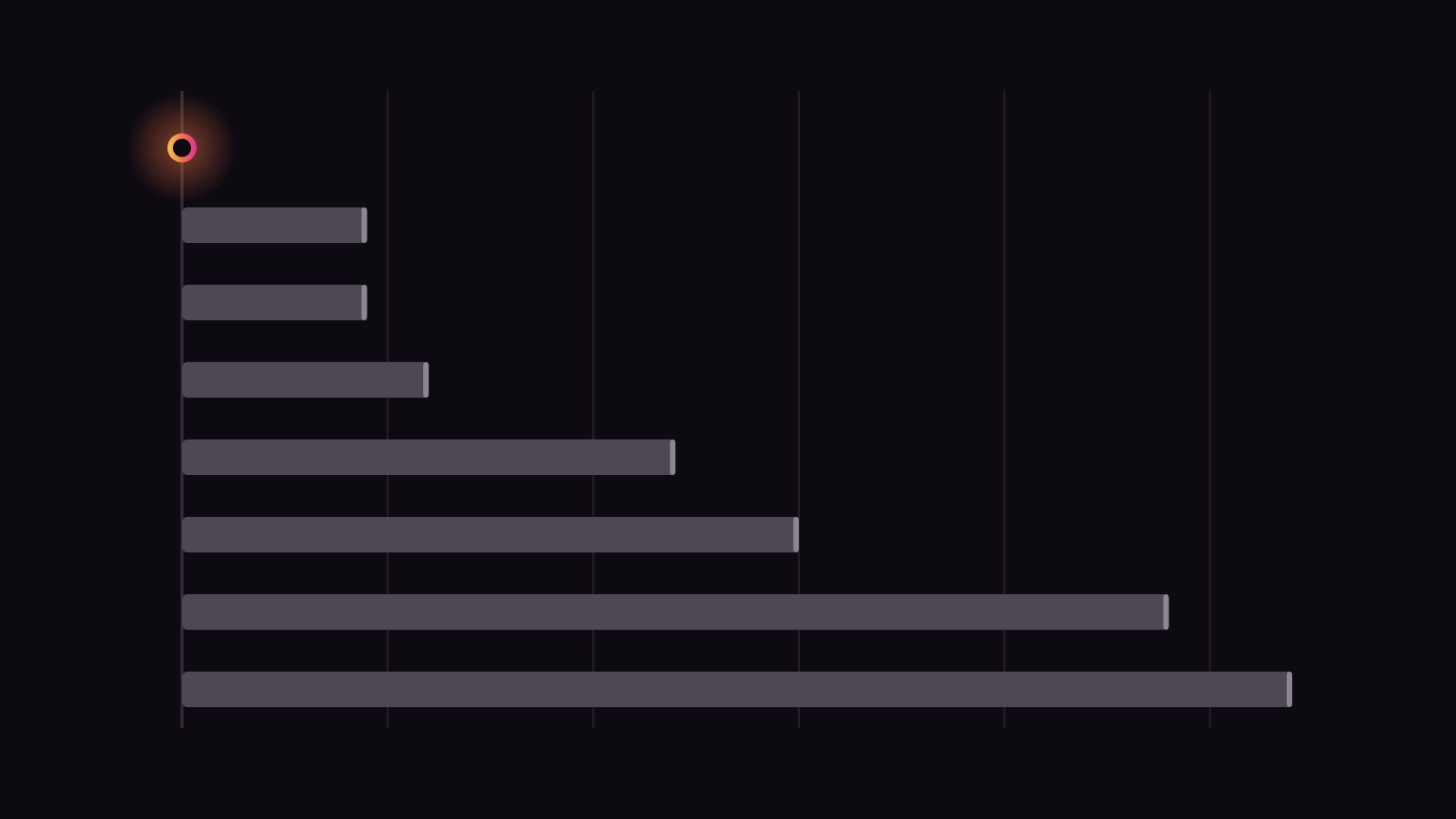
At about 60,000 characters an hour, Google's Chirp 3: HD and Amazon Polly's generative voices come to $1.80 an hour at list price. ElevenLabs' API costs $4.80 an hour on its v2 and v3 models, and a minute past a Creator allowance costs about $0.18, which is $10.80 an hour.
How many characters are in an hour of speech
Every per-hour figure in this guide rests on one assumption, so here it is in the open: one hour of narration is 60,000 characters. That comes from ElevenLabs' own price list, which maps 1,000 characters to about one minute of audio (275,000 characters, "~275 min"). Your own pace will differ. A slow, pausing documentary read gets more minutes out of the same text, a brisk explainer fewer. Swap in your own number if you have one, and every figure below scales with it.
For a sense of size, the DAISY Consortium puts an average 90,000-word novel at about 423,000 characters. That is a little over seven hours at our rate, and about 4.7 characters per word, spaces included.
TTS cost per finished hour, side by side
| Service and voice tier | Billing unit | List price | Per finished hour (60,000 characters) | Free allowance | What a re-take costs |
|---|---|---|---|---|---|
| Google Chirp 3: HD | Characters | $30 per 1M | $1.80 | 1M characters a month | Full price again |
| Amazon Polly Generative | Characters | $30 per 1M | $1.80 | 100,000 a month, first 12 months | Full price again |
| ElevenLabs API, Flash or Turbo | Characters | $0.04 per 1,000 | $2.40 | Plan allowance | Full price again |
| ElevenLabs API, v3 or v2 Multilingual | Characters | $0.08 per 1,000 | $4.80 | Plan allowance | Full price again |
| Amazon Polly Long-Form | Characters | $100 per 1M | $6.00 | 500,000 a month, first 12 months | Full price again |
| Google Studio | Characters | $160 per 1M | $9.60 | 1M characters a month | Full price again |
| ElevenLabs Creator, past the allowance | Minutes | about $0.18 a minute | about $10.80 | About 121 minutes in the $22 plan | Full price again |
| txt2mp3 | Nothing | One payment, $29 today | $0 | Unlimited | Nothing |
Two things stand out. The spread is wide: the same hour costs more than five times as much on Google Studio as on Chirp 3: HD. And the last column is the same on every cloud row. The full table for every tier, including the cheaper voices we left out because few people publish them, is in our guide to text-to-speech cost per hour of finished audio.
The costs that never show up on the pricing page
The list price assumes one take per line. Real narration does not work that way: a mispronounced name, a flat sentence or a script edit means generating the passage again, and every regeneration is billed in full. The DAISY Consortium found that corrections can make a finished book cost two to three times its first render.
Re-takes and script edits
Anyone who has narrated more than a page knows the pattern. A brand name comes out wrong. A question lands as a statement. You hear the draft read aloud and rewrite a paragraph. Each fix is a new request, and each new request is metered as if you had never sent the text before.
DAISY, which compared synthetic-voice costs for accessible publishing, put it in one line: titles needing multiple corrections throughout the text could end up two or three times the price of a single conversion. A list price per hour is a floor. The real cost per published hour is that floor times however many takes your standard takes.
Unused allowance and overage
A subscription moves the meter but does not remove it. You pay the plan fee whether you narrate two minutes that month or two hundred. If you narrate more than the allowance, you buy more at the per-minute rate. A plan sized for your busiest month wastes money in a quiet one, and a plan sized for the quiet one charges overage in the busy one.
Spaces, newlines and markup count too
The character count is longer than the word count suggests. Google bills spaces and newlines,
and every SSML tag except <mark>. A script with pronunciation fixes written as markup pays for
the markup. What exactly gets counted, service by service, is the subject of our explainer on
what per character billing actually means.
Three ways to stop paying per character
You can move to the cheapest per-character tier and accept a weaker voice. You can self-host an open-source model, which ends the bill but needs a GPU and the skills to run one. Or you can buy a one-time text-to-speech app that runs a modern model on your own Mac, where every render after the purchase is free.
Cheaper tiers: lower bill, flatter voice
Google's and Amazon's Standard voices cost $4 per million characters, which is $0.24 for an hour. That is genuinely cheap. It is also the tier that sounds like a screen reader, which is fine for internal notes and a hard sell for anything an audience is meant to sit through. Dropping a tier lowers the rate. It does not change what a re-take costs, which is still the full rate again.
Self-hosting an open model
Open models now sound good. VoxCPM2 is released under Apache-2.0, free for commercial use, with two billion parameters, 30 languages and 48 kHz output. You can download it today and run it yourself. The catch is the word "yourself": you need a machine with a capable GPU, a working Python environment, and the patience to keep both running. For an engineer that is an afternoon. For a writer or a video editor it is a project nobody asked for. What each route needs, from memory to disk to render time, is laid out in our guide to running text-to-speech locally on a Mac.
A one-time text-to-speech app on your Mac
The third route is the self-hosted model with the engineering done for you. txt2mp3 packages VoxCPM2 as a Mac app for Apple silicon. Setup downloads the models once, a little over 5 GB, and from then on every render happens on your own machine. There is no account to meter and no server in the loop.
The price is one payment: $29 for the launch batch, then $69, then $99 as the standing price as copies sell. The second take costs nothing, and so does the fifth. That changes how you work more than what you spend: a re-take stops being a budget decision and becomes an editing decision. As a side effect of the same design, your script never leaves the Mac.
Work out your own break-even month
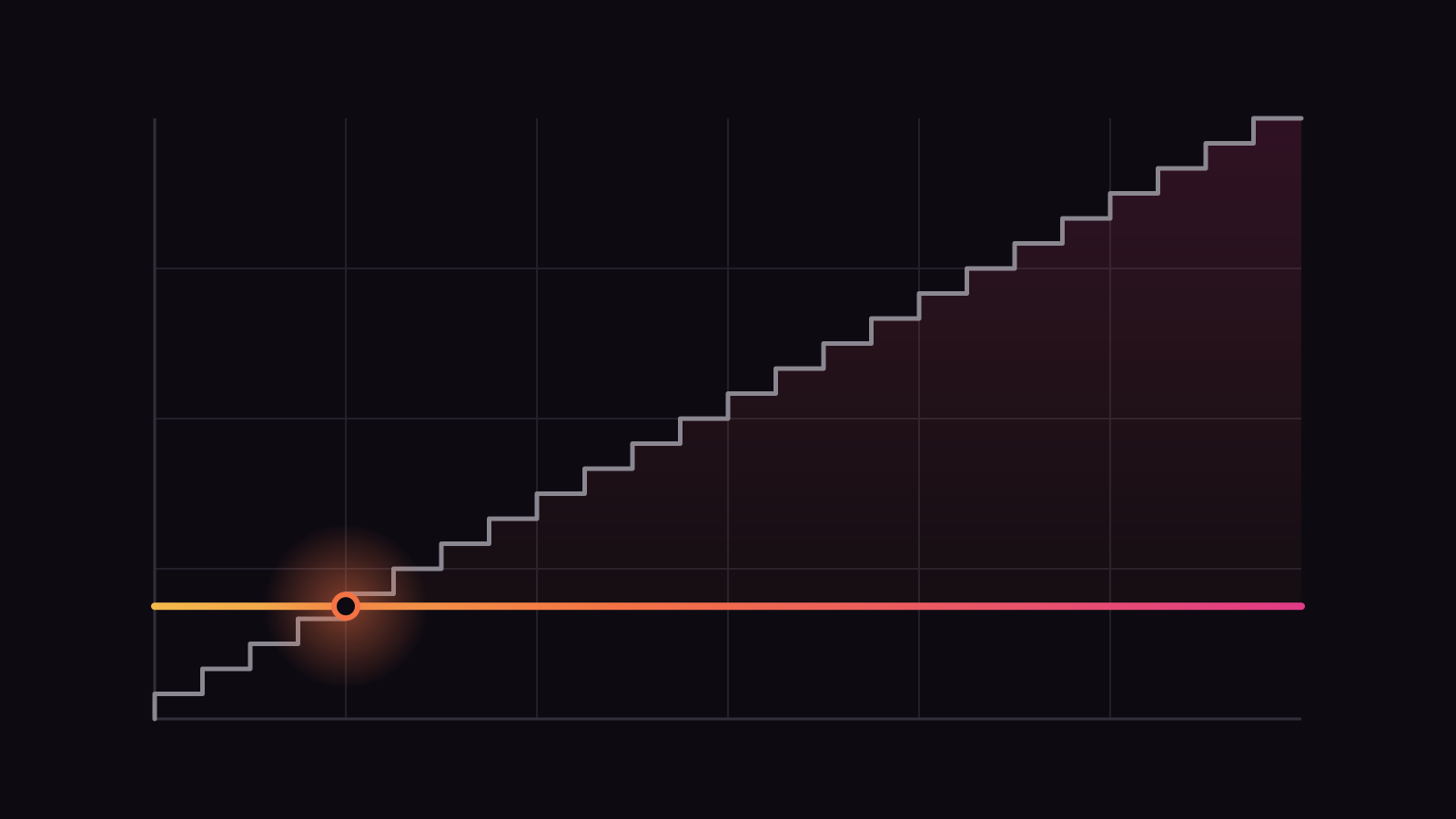
Divide the one-time price by what you pay each month. At txt2mp3's current $29 launch price against ElevenLabs' $22 Creator plan, the purchase is repaid in the second month. At the standing $99 price it is repaid in the fifth. Re-takes only move that earlier, because they cost nothing locally and something on every cloud plan.
| Monthly plan | 12 months | 24 months | Break-even at $29 | Break-even at $69 | Break-even at $99 |
|---|---|---|---|---|---|
| ElevenLabs Starter, $6 | $72 | $144 | month 5 | month 12 | month 17 |
| ElevenLabs Creator, $22 | $264 | $528 | month 2 | month 4 | month 5 |
| ElevenLabs Pro, $99 | $1,188 | $2,376 | month 1 | month 1 | month 1 |
The full version of this calculation, with your own plan and output plugged in, is our guide on when a local TTS app beats paying monthly.
A worked example: four long articles a month
Say you narrate four 3,000-word articles a month for a newsletter or a podcast feed. At 4.7 characters a word that is about 14,100 characters each, 56,400 a month, or roughly 56 minutes of audio at our rate.
Render each section twice, which is a modest habit, and you send about 112,800 characters. At a credit a character, which is what the plan's own minute estimate implies, that just fits inside ElevenLabs Creator's 121,000 credits, so the bill is $22 a month and $264 a year. On txt2mp3 the same year costs the one-time price, and the second take of every section is free.
The fair comparison also goes the other way. On Google's Chirp 3: HD, 112,800 characters a month sits inside the free million. If you can call an API and are happy with that voice, that volume costs nothing on Google either. It is the creator plans, the ones built for people who do not write code, where the meter bites at this size.
One long read at a time, with every service priced and a second take counted, is worked through in what it costs to narrate a 5,000-word article.
A worked example: a 90,000-word novel
One pass over DAISY's average novel, 423,000 characters, costs this much at list price before any free allowance:
| Service | One clean pass | With corrections at two to three times |
|---|---|---|
| Google Chirp 3: HD or Polly Generative | $12.69 | $25 to $38 |
| ElevenLabs API, v3 | $33.84 | $68 to $102 |
| Amazon Polly Long-Form | $42.30 | $85 to $127 |
| ElevenLabs Creator, past the allowance | about $76 | about $152 to $228 |
| txt2mp3 | $0 after the purchase | $0 |
A single book does not make the case for a purchase on the cheapest API. A second book does start to, and an author who revises after hearing the draft does most of all, because revision is where the cloud bill multiplies and the local one stays at zero. Budgeting a whole audiobook gets its own guide: how to budget AI narration for an audiobook.
Where a cloud subscription still wins
Local is not always the answer. If you generate a few minutes a month, a free tier or a $6 plan costs less than any purchase. Cloud services offer more languages and ready-made voices, work on Windows and phones, and need no 5 GB download. txt2mp3 is a Mac app for Apple silicon, and it says so.
Volume is the first test. ElevenLabs' free plan covers about ten minutes a month, and Google's free million Chirp 3: HD characters covers more than sixteen hours. If that is your whole need, stay there.
Platform is the second. txt2mp3 does not run on Windows, Linux, an Intel Mac or a phone. A team that edits on mixed machines, or a developer who needs speech generated on a server, is better served by an API.
Breadth is the third. A cloud library offers a large catalogue of ready-made voices, dubbing, team seats and an API you call from your own software. A local app ships one very good model, presets and voice cloning from your own recordings. For one narrator and many minutes, that is the better trade. For a cast of forty characters in a dozen languages, it is not. Our comparison of ElevenLabs and txt2mp3 goes through that line feature by feature, and local versus cloud text-to-speech covers the trade in general.
The trial in the app speaks 120 characters before you pay anything, which is enough to judge the voice before the arithmetic matters.
Frequently asked questions
What does one finished hour of AI narration cost once re-takes are counted?
At 60,000 characters an hour, the list price runs from $1.80 (Google Chirp 3: HD, Amazon Polly Generative) through $4.80 (ElevenLabs API v3 or v2) to about $10.80 (ElevenLabs Creator past its allowance). Every re-take is billed again, so two takes per line doubles those figures and three triples them. The DAISY Consortium found corrections can push a book to two or three times its first-render price. On a local app the hour costs nothing after the purchase, however many takes it needs.
When does a one-time text-to-speech app pay for itself against a monthly plan?
Divide the one-time price by your monthly fee. Against ElevenLabs' $22 Creator plan, txt2mp3's $29 launch price is repaid in month two and the $99 standing price in month five. Against the $6 Starter plan those become month five and month seventeen. Heavier use only moves the crossing earlier, because a bigger plan raises the monthly fee while the purchase price stays where it is.
Do spaces and punctuation count as characters?
On Google Cloud, yes: the billed count includes spaces and newlines, and every SSML tag except
<mark>. Amazon's pricing page says you are charged for the characters you convert but does
not spell out the rule. Assume whitespace and markup count unless a provider says otherwise.
Does regenerating a line I didn't like cost characters again?
Yes, on every cloud service we checked. A regeneration is a new request, and the meter counts the text you send each time, with no discount for having sent it before. That is why a list price per hour is a floor. On a model that runs on your own Mac there is no meter, so a re-take costs a few seconds of the machine's time and nothing else.
Are prepaid character packs a way off the meter?
No. They change when you pay, not what you pay for. ElevenLabs' help centre says its pay-as-you-go credits are stored as a dollar value and converted at your current plan's rate, so each character still draws down a balance. Only removing the meter, by running the model on hardware you own, makes the next render free.
Is a voice model on my own Mac as good as a cloud voice?
The gap is much smaller than it was. VoxCPM2, the model txt2mp3 runs, has two billion parameters, covers 30 languages and outputs 48 kHz audio. Cloud leaders still offer more ready-made voices and more languages, and long reads are where they are strongest. Judge it on your own text: the trial speaks 120 characters before you pay anything.
Where the numbers came from
Google Cloud Text-to-Speech pricing
cloud.google.com/text-to-speech/pricingStandard and WaveNet voices at US$4 per 1 million characters with 4 million free a month; Neural2 at US$16 with 1 million free; Chirp 3: HD at US$30 with 1 million free; Studio at US$160 with 1 million free; Instant custom voice at US$60 with no free tier; and the counting rule that spaces, newlines and every SSML tag except
<mark>are billed. Fetched 12 October 2026.Amazon Polly pricing
aws.amazon.com/polly/pricingStandard at $4.00, Neural at $16.00, Generative at $30 and Long-Form at $100.00 per 1 million characters; free tiers of 5 million Standard characters a month, and 1 million Neural, 500 thousand Long-Form and 100 thousand Generative characters a month for the first 12 months. Fetched 12 October 2026.
ElevenLabs API pricing
elevenlabs.io/pricing/apiRegular rates per 1,000 characters of $0.08 for v4, v3 and v2 Multilingual and $0.04 for Flash and Turbo; the Creator plan at $22 a month including 275,000 v3 or v2 characters shown as "~275 min", the 1,000-characters-a-minute mapping behind our 60,000-characters-an-hour assumption; and the temporary v4 and first-month discounts we did not use. Fetched 12 October 2026.
ElevenLabs pricing
elevenlabs.io/pricingPlan prices of $6 Starter, $22 Creator and $99 Pro at their regular monthly price; Creator's 121k credits, about 121 minutes of text-to-speech and about $0.18 per extra minute; the free plan's 10k credits and about 10 minutes. Fetched 12 October 2026.
ElevenLabs help centre: What are credits?
help.elevenlabs.io/hc/en-us/articles/27562020846481-What-are-creditsThat credits were previously called characters and the value is unchanged, and that pay-as-you-go credits are stored as a dollar value converted at your current plan's rate. Fetched 12 October 2026.
DAISY Consortium: AI Text To Speech Cost Comparison
daisy.org/news-events/articles/ai-text-to-speech-cost-comparisonAn average novel of 90,000 words or 423,000 characters, and that titles needing multiple corrections could end up two or three times the price of a single conversion. Dave Gunn, 12 May 2025. Fetched 12 October 2026.
VoxCPM2 model card
huggingface.co/openbmb/VoxCPM2Apache-2.0, free for commercial use, two billion parameters, 30 languages and 48 kHz output. Fetched 12 October 2026.
txt2mp3, first-hand
The $29, $69 and $99 one-time price ladder; the one-time model download of a little over 5 GB; the Apple silicon requirement; the 120-character trial. Derived, not quoted: every per-hour figure (list price times 60,000 characters), the 4.7 characters per word (DAISY's 423,000 characters over 90,000 words), the worked examples and the break-even months. The two-takes habit and the 3,000-word article are stated assumptions, not measurements.